
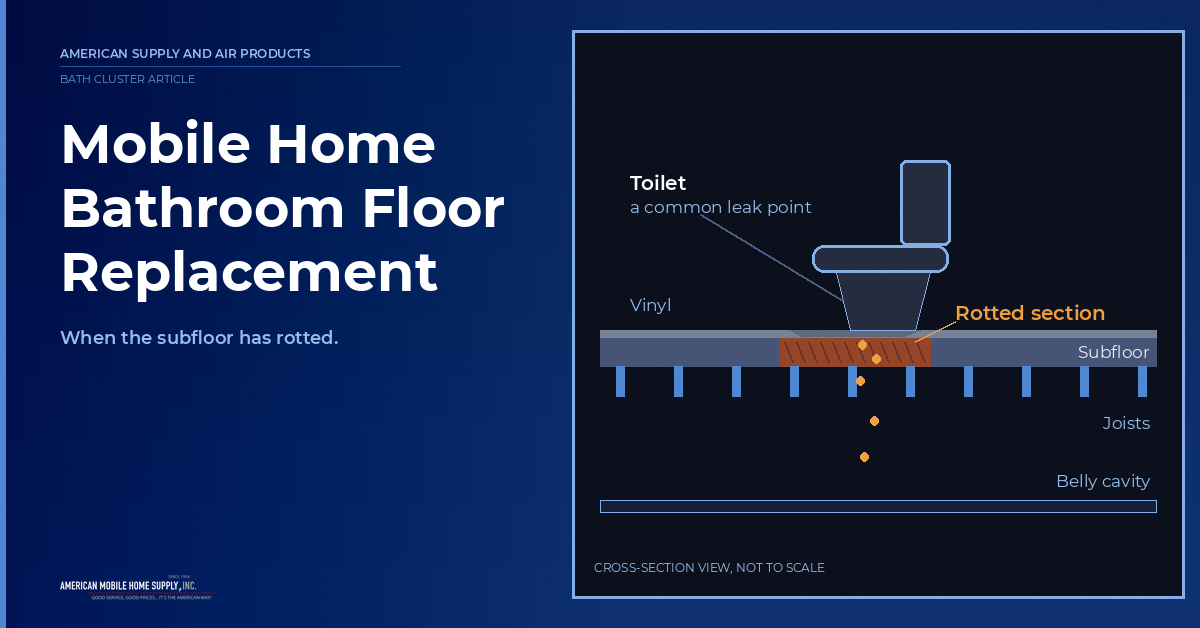
The floor feels a little softer every time you step near the toilet. Maybe there is a dark ring around the tub, or the vinyl seems to dip in one spot. That soft, sinking feeling under your feet is often the first sign that water has damaged the floor underneath.
If you’re trying to figure out how to replace bathroom floor in mobile home construction, the job comes down to a few important steps: find out how far the damage has spread, see what is underneath the vinyl, remove the damaged material, and fix the source of the water before putting everything back together.
Skip that last step and you could end up repairing the same floor again later.
Mobile home bathroom subfloor rot often starts with a small leak that goes unnoticed. Water from a leaking toilet seal, dripping faucet, overflowing sink, or plumbing connection can get underneath the vinyl and stay there.
The vinyl can keep that moisture trapped against the wood below. There is also limited airflow in the space underneath the floor, so the area may take a long time to dry.
Once the wood stays wet, the damage gets worse. Particleboard can absorb water, swell, soften, and eventually start breaking apart. The tricky part is that you may not see any of this from above until the floor starts feeling weak.
That is why a small soft spot does not always mean a small repair.
If you’re wondering how to fix bathroom floor in mobile home, don’t start cutting as soon as you find one soft spot. First, figure out how far the damage actually goes.
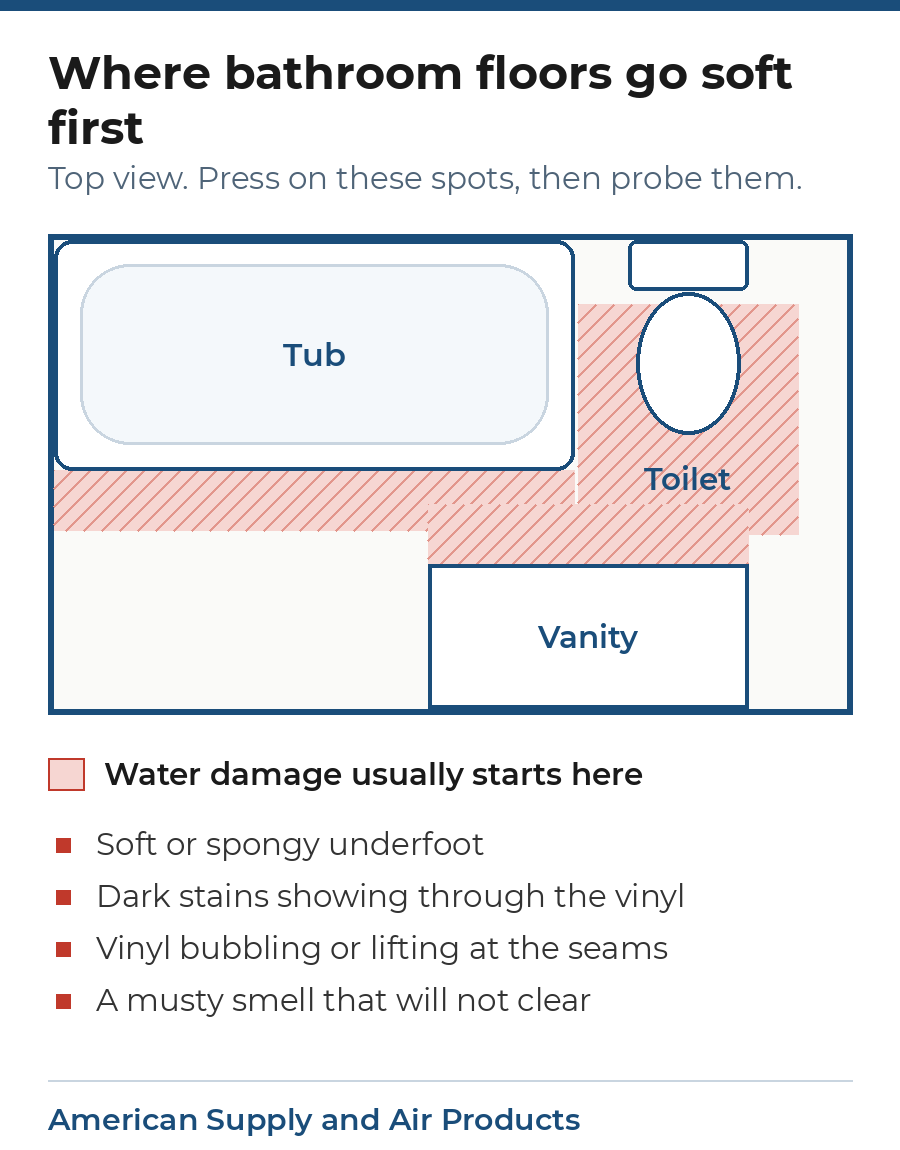
Press around the toilet, along the edge of the tub, and anywhere water may have collected. Look for:
A screwdriver can also help you check questionable areas. The goal is to find solid flooring, not simply the edge of the stain you can see.
Rot spreads sideways under the vinyl
A soft patch that seems limited to the area under the toilet can extend all the way to the tub base without any visible sign in between. Probe a few inches past where the floor first feels soft before deciding how much subfloor to remove.
Water does not always stay directly underneath the original leak. A soft spot beside the toilet may extend toward the tub even when the vinyl between the two areas looks perfectly normal.
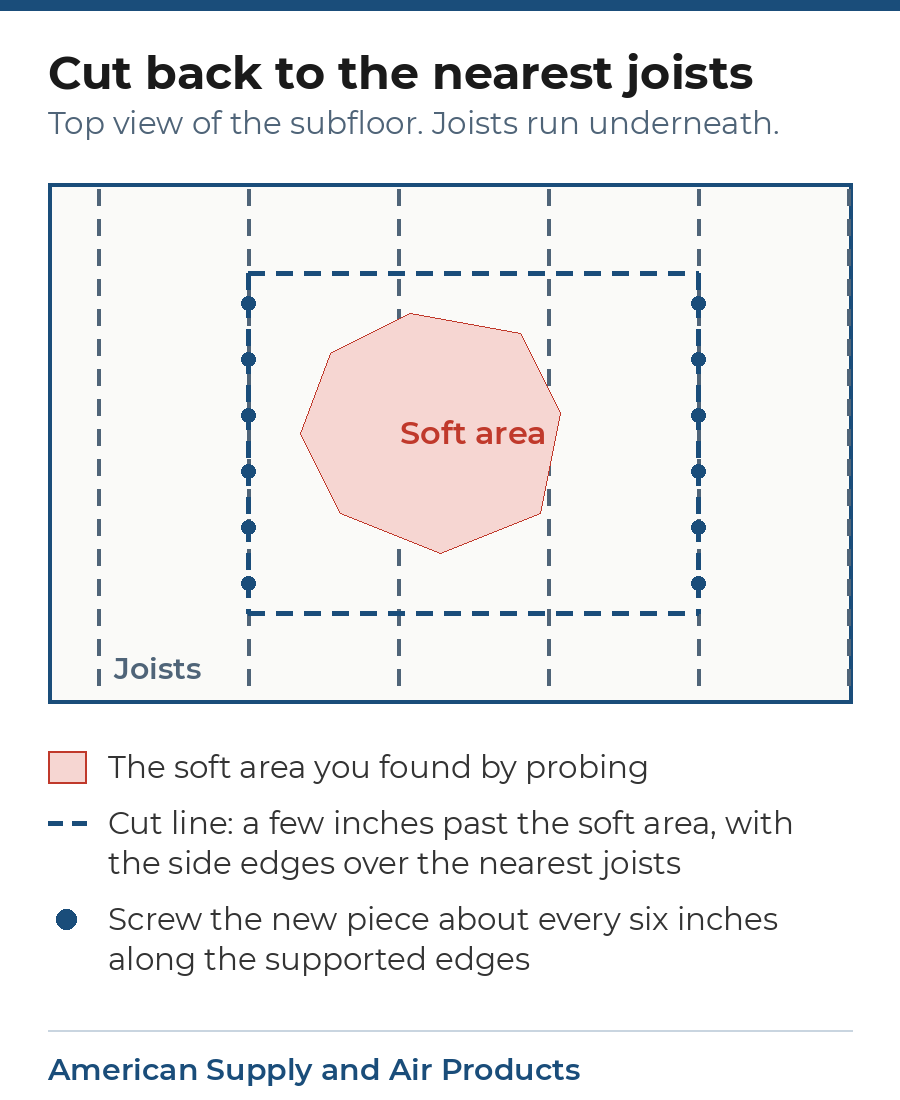
Probe a few inches beyond the first damaged area before deciding where to cut. You want the new patch to connect to solid material on every side.
If the damage runs all the way to the tub, take a closer look at the tub and the plumbing around it. If the tub itself needs to come out, how to replace a tub in a mobile home becomes part of the job.
Before learning how to replace subfloor in mobile home bathroom areas, it helps to know what you’re actually cutting through.
Under the bathroom vinyl, you will typically find either particleboard or plywood sitting directly over the floor joists. The exact materials can vary by the age and construction of the home.
Common subfloor materials
The material matters because it affects how you remove the damaged section. Plywood usually gives you a cleaner edge when you cut it. Damaged particleboard can crumble around the cut, so you may need to remove a little more material to reach solid flooring.
Once you know where the damage ends and what type of subfloor you have, you can start the actual repair, which is the core of how to replace a bathroom floor in a mobile home.
Six steps, in order
None of the work above matters much if the leak that caused the rot is still active. A failed wax ring under the toilet, a loose slip nut under the tub, or a worn supply line under the sink are the three most common sources. Each one is worth testing before the new subfloor goes down and gets covered again.
Check the belly cavity below while the floor is open, if access allows. Water that reached the subfloor from above sometimes also reaches the insulation and board underneath, and belly board repair is a separate job from the subfloor work happening above it.
Let the area dry completely, ideally with a fan running for at least 24 to 48 hours, before closing anything back up. The EPA mold resource page has useful guidance on drying timelines and safe moisture levels, since trapping residual dampness under new subfloor just restarts the same problem.
How to repair mobile home bathroom floor damage that has spread into the joists themselves is a bigger job than a subfloor patch. Sistering a joist, as covered in the steps above, works when only one or two are affected. When three or more joists in the same area feel soft, or the damage extends past the bathroom into the hallway framing, that usually crosses into work worth having a contractor look at rather than tackling solo.
Widespread joist damage is often the sign that other fixtures nearby are also due, not just the floor. It is worth stepping back and checking the mobile home bathroom guide for how this repair fits into the bigger picture, especially if the sink sitting on the same section of floor is original to the home. How to install a bathroom sink in a mobile home covers replacing that fixture if it turns out to be part of the same aging system.
Browse mobile home parts at American Supply and Air Products, or call 1-800-368-6208 for help identifying the right subfloor materials for your repair.


