
Streaks on the bathroom ceiling, peeling paint above the shower, or a musty smell that never seems to go away can all point to a ventilation problem. The shower may not be the real culprit. If the bathroom fan is not moving enough air, moisture can hang around much longer than it should.
If you’re trying to figure out how to replace bathroom exhaust fan in mobile home units, start by making sure the fan is actually the problem. The replacement process depends on where the fan is mounted and how it vents outside.
For most homes, the first step in how to replace a mobile home bathroom exhaust fan is identifying the fan type. Ceiling-mounted, wall-mounted, and roof-mounted fans can look similar from inside the bathroom, but they are installed differently. Choosing the wrong replacement can leave you with a fan that does not fit the existing opening.
Look up before removing anything.
A round or square grille built into the ceiling is the most common setup. The fan usually connects to a short duct that runs through the space above the bathroom.
A grille installed high on an exterior wall is another possibility, especially in older single-wide mobile homes where the bathroom sits against an outside wall.
Some older homes have a roof-mounted combination unit. From inside, you may see a normal ceiling grille. From outside, you can usually spot a raised vent or dome on the roof.
If you are not sure which type you have, check the outside wall or roof before buying a replacement. Seeing where the existing vent exits the home can save you from ordering the wrong fan.
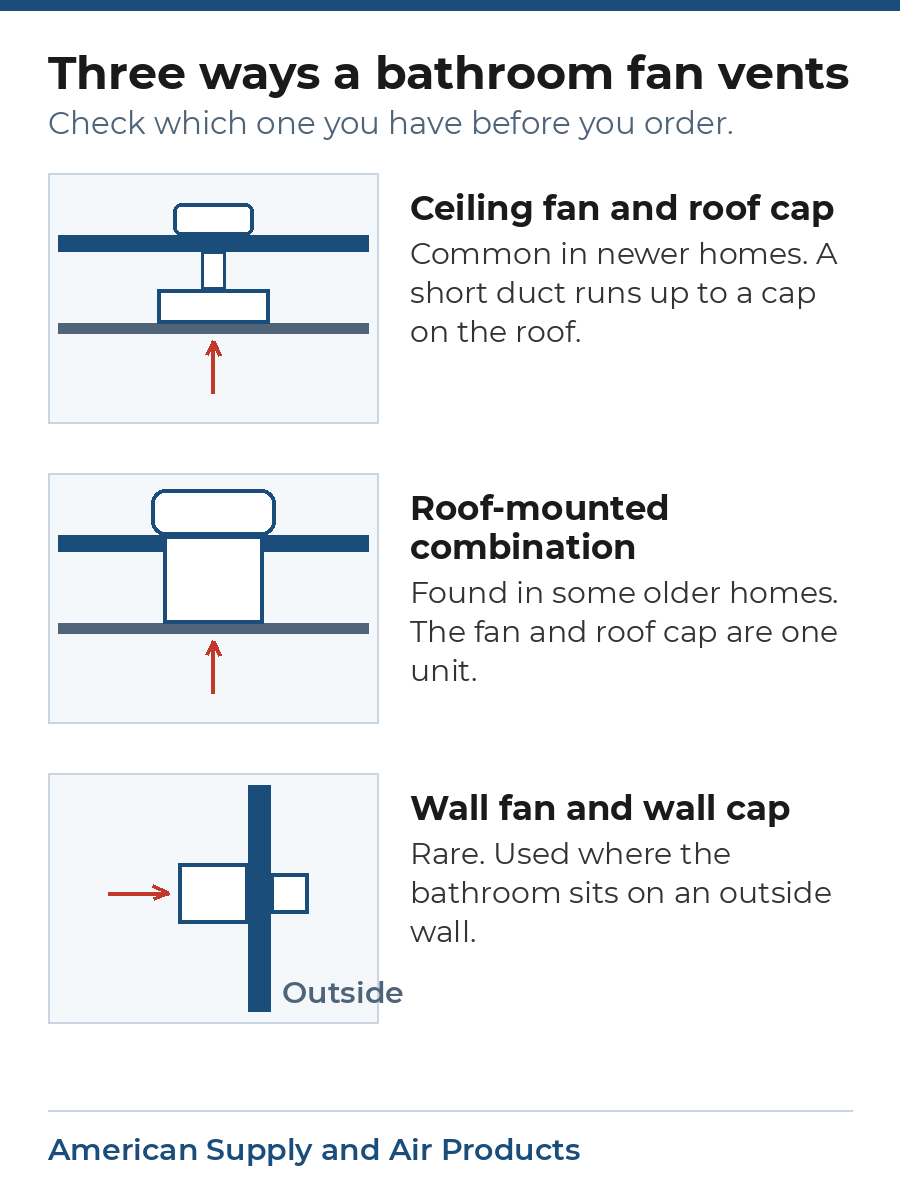
| Ceiling-mounted | Common inNewer units, most common | Replacement complexityStraightforward, usually reuses the same opening |
|---|---|---|
| Wall-mounted | Common inOlder singlewides, exterior-wall bathrooms | Replacement complexityModerate, needs exterior siding access |
| Roof-mounted combination | Common inOlder doublewides | Replacement complexityHigher, whole assembly usually replaced together |
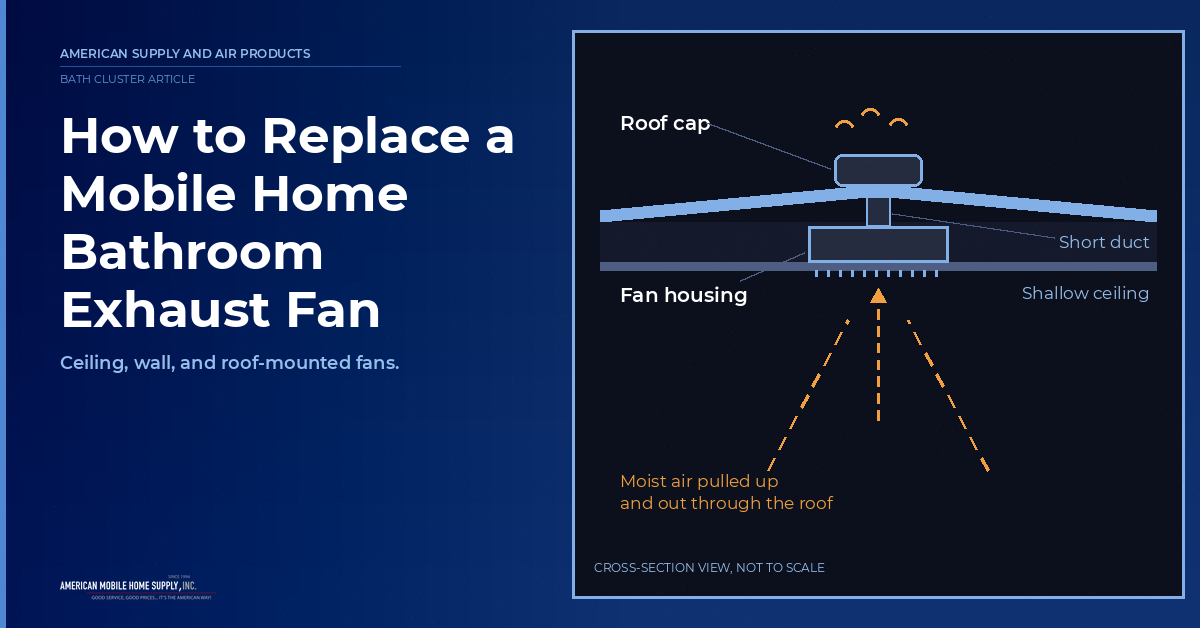
How do mobile home bathroom exhaust fans work? The basic job is simple: the fan pulls humid air out of the bathroom and sends it through a duct to the outside.
In a mobile home, that duct run is often shorter, and the space above the bathroom can be shallower than what you would find in a typical house. That means the fan housing and ductwork have less room to work with.
Over time, moisture, dust, and lint can build up around the fan and inside the duct. A dirty grille or clogged duct can reduce airflow even when the motor is still running.
This is also why it helps to look at the whole setup before ordering a replacement. The complete mobile home bathroom guide covers other bathroom fixtures and repairs that can be affected by the same moisture problems.
For many newer mobile homes, this is the most straightforward type of replacement.
Before touching the fan, turn off the power at the breaker. Do not rely only on the wall switch.
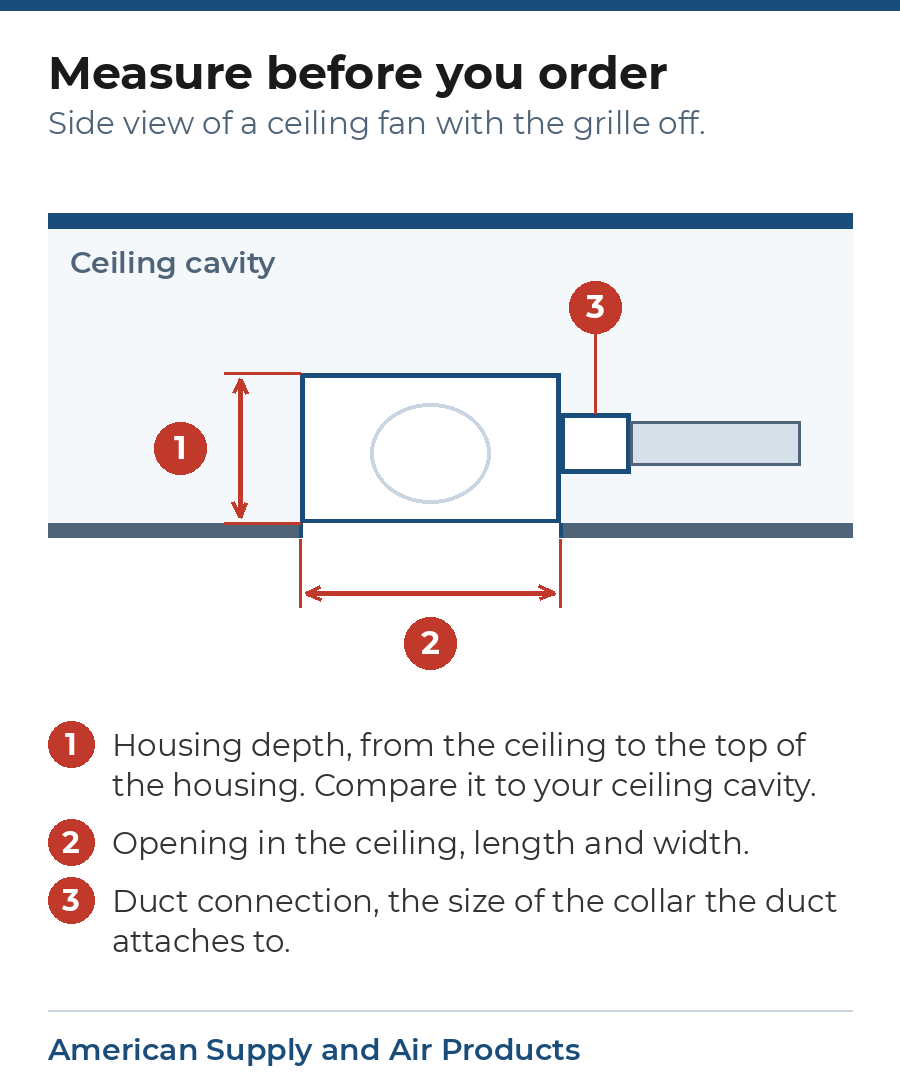
Remove the grille from the ceiling to expose the mobile home bathroom fan housing. Measure the housing depth, opening, and duct connection before ordering a replacement. Mobile home ceiling cavities can be much shallower than standard house framing, so a fan that fits a normal bathroom may not fit yours.
Shallow ceiling cavities do not forgive a standard housing
A fan built for typical house framing may hang down too far below the ceiling line or fail to clear the duct run entirely. Confirm the housing depth against your measured cavity before ordering.
How to install bathroom exhaust fan in mobile home units mounted to an exterior wall works differently from a ceiling swap. Access typically comes from outside through the wall cap rather than from inside the bathroom. Remove the exterior cap first, then work the housing out through the same opening from indoors. Wall-mounted replacements are less common to source than ceiling units, so measure the housing dimensions and duct diameter carefully. An undersized housing leaves a gap around the trim that lets in outside air and pests, and an oversized one will not seat flush against the siding no matter how much caulk goes around it. Check whether the original ran a straight duct through the wall cavity or an angled one before ordering, since the two are not interchangeable without cutting a new opening.
A roof-mounted fan is a different animal.
With this type of mobile home bathroom vent replacement, the fan and roof vent are usually part of the same assembly. Instead of replacing only the motor, you will often replace the complete unit.
Because the work takes place on the roof, use appropriate fall protection and avoid working in wet, windy, or otherwise unsafe conditions.
Once the old unit is accessible, remove the fasteners holding it to the roof and carefully separate the mounting flange from the roofing seal. Avoid tearing the surrounding roofing material.
Install the replacement in the same opening and follow the manufacturer’s sealing requirements around the flange. The seal matters just as much as the fan itself. A fan that works perfectly but allows rainwater through the roof can create a much bigger problem than the original fan failure.
Our mobile home roof vents selection includes replacement vent options for common mobile home roof applications.
Whichever mount type you are replacing, size the fan to the room rather than just matching the old unit, since the original may have been undersized to begin with. Bathrooms with a separate toilet closet or a combined tub and shower generally need the higher end of the range rather than the bare minimum. Our mobile home bathroom exhaust fans selection covers CFM ratings across all three mount types in one place.
CFM sizing rule of thumb
For example, a 40-square-foot bathroom still requires a 50 CFM fan. The HUD Code sets 50 CFM as the minimum for every mobile home bathroom regardless of floor area, so a 40 CFM model wouldn’t meet the requirement even though the room is 40 square feet.
You can compare different mobile home bathroom exhaust fans by CFM, noise level, housing dimensions, and mounting style before choosing a replacement.
If energy efficiency matters, the Energy Star ventilation fans information also provides guidance for comparing efficient models.
Browse mobile home parts at American Supply and Air Products, or call 1-800-368-6208 for help matching a replacement fan to your ceiling cavity or roof opening.


